Is There a New Garden Fence Law in the UK? (2026)
The short answer is no. What the viral posts get wrong, what genuinely applies in 2026, and the handful of rules worth knowing before you replace a fence.
Every couple of years a post goes viral claiming "the new garden fence law" has changed everything. It hasn't. The rules governing garden fences in England and Wales are broadly the same as they have been for over a decade — they're just widely misunderstood.
This page answers the "is it new?" question honestly. The full detail sits on three dedicated pages: maximum fence height and planning permission, the 1m road rule and trellis, and the 12 year rule.
Is there a new garden fence law in the UK in 2026?
No. The rules people keep calling "new" are the permitted development limits under the GPDO 2015 (2 metres in most gardens, 1 metre adjacent to a highway), the adverse possession regime introduced by the Land Registration Act 2002, and the long-standing position that there is no general legal duty to maintain a boundary fence. None of those changed in 2026. What does change, council by council, is enforcement appetite and the spread of Article 4 directions — which tighten the rules locally, never loosen them.
So which rules actually apply to my fence?
Four, in order of how often they bite:
- 2m height limit in most gardens without permission, measured from natural ground level. Detail here.
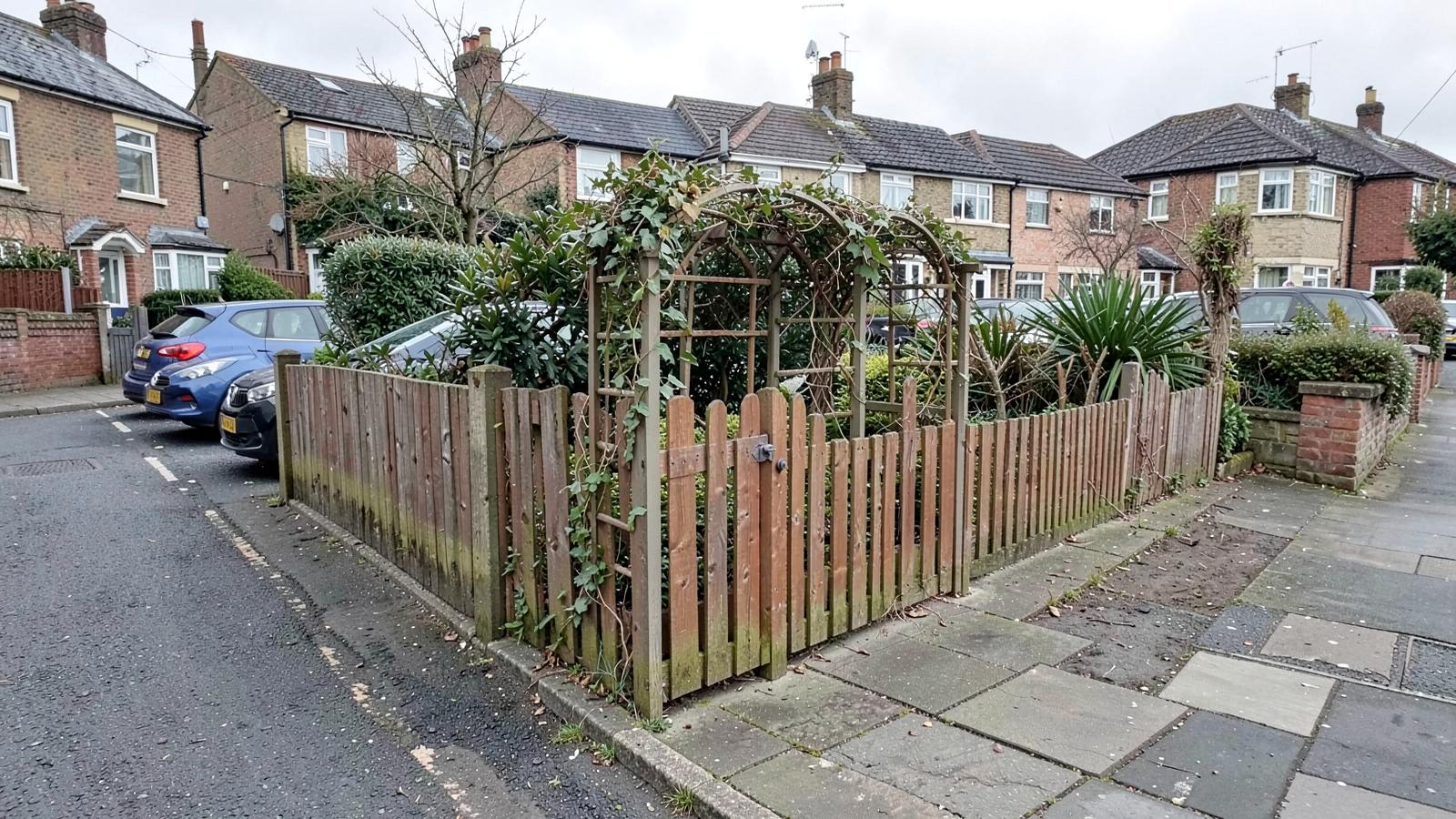
- 1m limit where the fence adjoins a highway used by vehicles or its footpath. Detail here.
- Trellis counts towards the height. It is not exempt.
- Ownership comes from the deeds, not from left-or-right. Detail here.
Do I need permission to replace my fence?
No — replacing a fence on the same line, at the same height, within the permitted development limits is not development requiring an application. You only need to apply if you are going taller than the limit, moving onto a new line, or the property is a listed building, or permitted development rights have been withdrawn by an Article 4 direction or by a condition on the original planning permission. Conservation areas, AONBs and National Parks are where those restrictions cluster, so check rather than assume.
Do I have to tell my neighbour before replacing a fence?
Legally, no — if the fence is yours and it stays on your land. Practically, yes. You need their agreement to work from their side, and two weeks' notice with dates, spec and a phone number prevents most of the arguments that otherwise surface mid-job. The Party Wall etc. Act 1996 does not apply to fences; it covers walls and shared structures, so there is no formal notice procedure to follow here.
What does a planning application cost if I do need one?
A householder planning application in England carries a fixed fee that is reviewed periodically — check the current figure on the Planning Portal fee calculator rather than trusting a number in an article. It is small relative to the cost of building a fence twice. Separately, you can apply for a Lawful Development Certificate to confirm an existing or proposed fence is permitted development; buyers' solicitors sometimes ask for one, and it is worth having if you plan to sell.
Can my neighbour force me to fix my fence?
No, unless your deeds contain a positive covenant requiring you to maintain that boundary, or the fence has become dangerous. If they want it replaced and you don't, they can build their own just inside their land. The full picture, including cost-splitting and access, is on who is responsible for a garden fence.
Where the rules come from
- Planning Portal — fences, gates and garden walls
- The Town and Country Planning (General Permitted Development) (England) Order 2015, Schedule 2, Part 2, Class A
- Party Wall etc. Act 1996 — legislation.gov.uk
General information about England and Wales, not legal advice.
When the law isn't the real problem
Most fence disputes aren't legal — they're about who pays and when. If you've worked out the fence is yours and you want a real price for replacing it, send us three photos and your postcode and we'll come back with a written all-inclusive number the same day.