Choose 358 mesh when…
- Climbing is the main risk on the site.
- CCTV or staff need to see through the boundary.
- The site faces the public and a softer look helps.
Hard to climb and see-through, or a robust, forbidding boundary.
Choose 358 mesh where climbing and CCTV sightlines matter most. Choose palisade where a strong visible deterrent and a robust steel look suit the site.
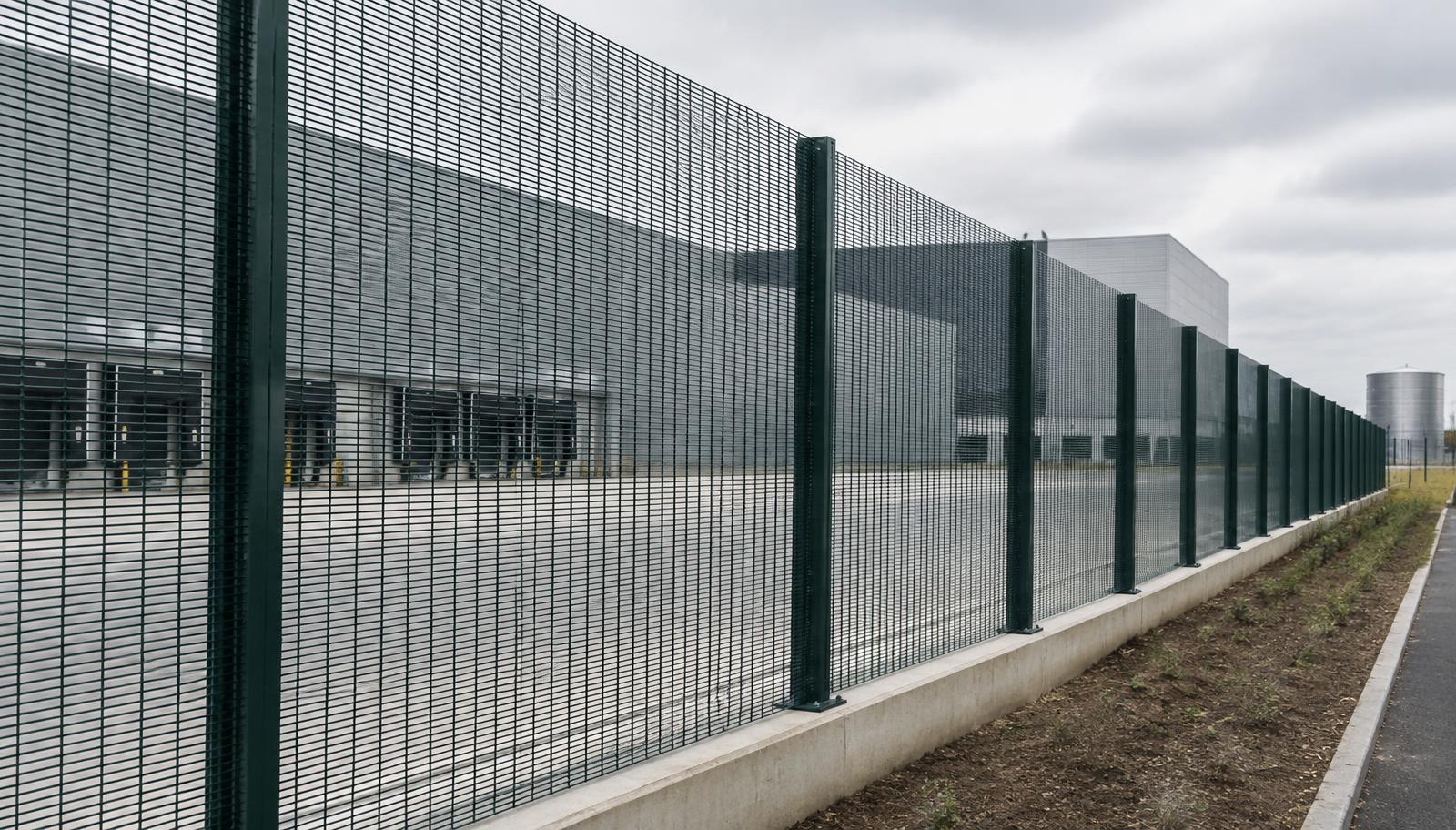
Dense welded mesh with a nominal 76.2 × 12.7mm aperture and 4mm wire.
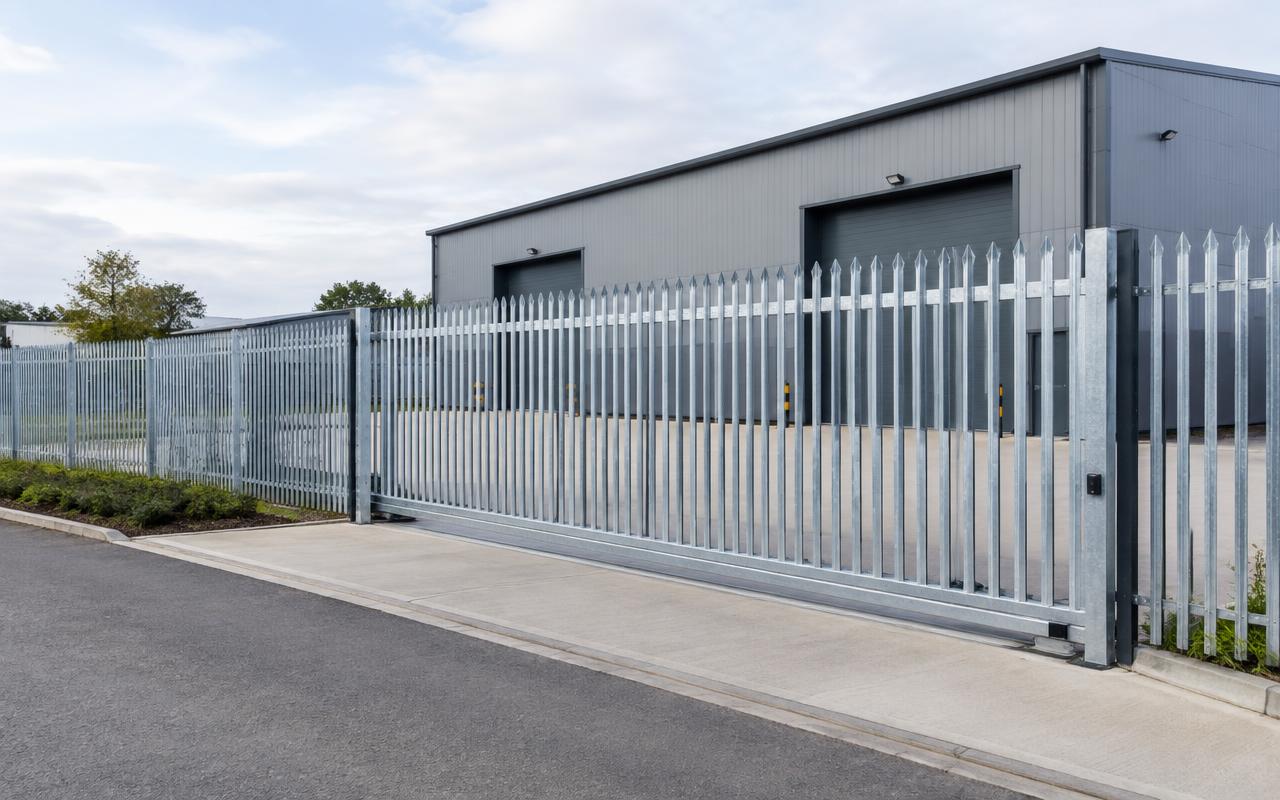
Vertical steel pales, W or D section, bolted to rails between posts.
Usually costs more per metre than palisade or twin-wire mesh. Any formal security rating only applies to the certified product named.
Harder look is wrong for many schools and public frontages, and the view through it is limited.
Either works. Priced by hand.
They resist different things. 358 mesh has a 12.7mm horizontal gap that is hard to grip, so it is harder to climb. Palisade looks more forbidding and is very robust, but its rails can give a foothold. Any formal security rating belongs to a specific tested product, not to either system as a whole.
358 mesh. It is open, so cameras and staff can see through it. Palisade pales block more of the view, especially at an angle.
BS 1722-14 covers open-mesh steel panel fences such as 358. BS 1722-12 covers steel palisade. We specify to them where the brief calls for it and confirm the product against the manufacturer's data.
Yes. Pedestrian and vehicle gates are made for both systems. Include gate count, width and use in the enquiry.
In England, usually yes above 2m, or above 1m next to a road used by vehicles. Most security fences are taller than 2m, so check with the council early. See our security fence height guide.