Palisade fencing. A clear deterrent.
Steel palisade for sites that need a clear deterrent.
- £5m public liability
- RAMS on every job
- Survey to handover
- Reply in one working day
What is palisade fencing?
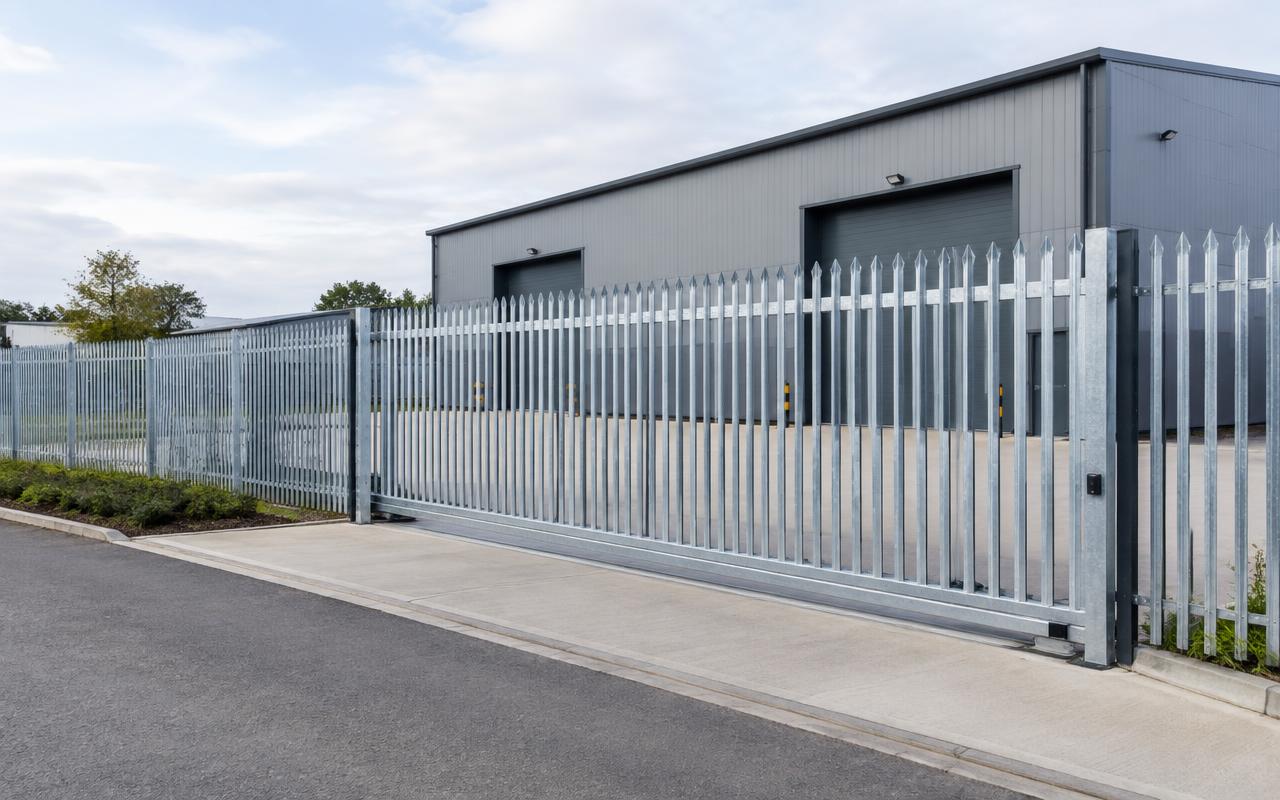
Palisade is a steel security fence made of vertical pales bolted to horizontal rails between posts. Pales come in W section (stronger, usual for security) or D section (lighter, for lower-risk boundaries), usually with pointed tops. BS 1722-12 is the British Standard for steel palisade fences. It sets out general-purpose and security types at a range of heights. The exact system and height are chosen for the site.
What's included
Supplied & installed
Panels, posts, fixings and matching gates.
Survey to handover
Measured, set out and delivered as a GoodFence-managed installation.
RAMS on every job
Site-specific risk assessment before work starts.
One point of contact
From drawings to completion.
Example scopes
The detail we confirm before a price is issued. See before and after
 Example · Steel palisade
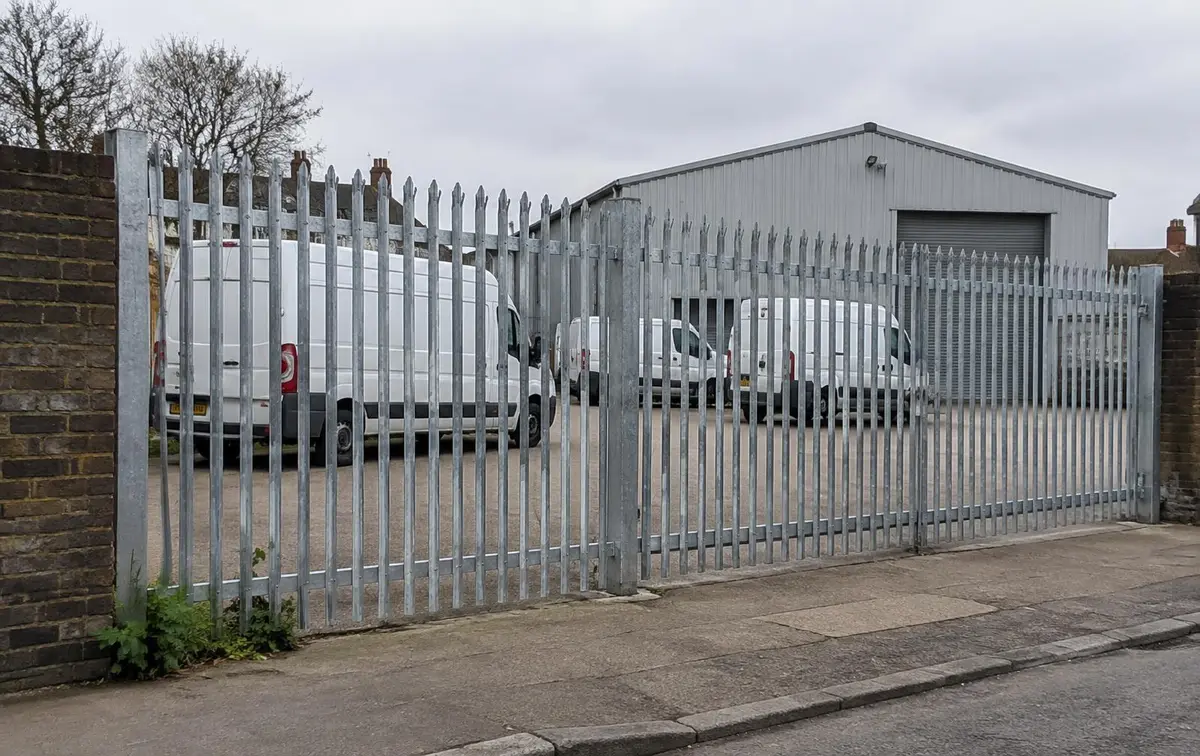
Fleet yard frontage
Palisade frontage with double swing gates, tied into the existing brick piers.
- System
- W-section palisade, triple-pointed
- Height
- 2.4m
- Run
- 46m + double gates
- Typical programme
- 3 working days
Typical specification
- Specification route
- System selected to the site briefBS 1722-12
- Height
- Selected for the site risk and chosen system
- Pale profile
- W section or D section, product-dependent
- Pale tops
- Pointed or rounded options, product-dependent
- Finish
- Hot-dip galvanised, with optional manufacturer coating
- Fixing
- Ground-set or base-plated, subject to the substrate
- Gates
- Pedestrian or vehicle gates to the same system
Exact spec confirmed against the chosen manufacturer at survey.
Is it the right system?
Suits
- Industrial, utility and storage sites that want a clear visual deterrent.
- Long, robust perimeters on mixed or sloping ground.
- Sites that need matching pedestrian or vehicle gates.
Consider another system
- Schools or public frontages where a softer look matters.
- Sites that need the clearest sightlines; mesh is more open.
- Boundaries where climbing via the rails is a concern; consider 358 mesh.
What drives the price
- 1Length of run and number of corners or changes of level.
- 2Height and the system or product specified.
- 3Ground: soft dig, hardstanding, or core-drilling into slab.
- 4Gates: count, width, and pedestrian or vehicle use.
- 5Site access, working hours and plant needed.
- 6Removing an existing fence, if it is in the scope.
Commercial work is priced by hand from your drawings, scope or survey. No VAT is added.
How the systems compare
What each system is, side by side. Security ratings only apply to certified products.
- Palisade
- Construction
- Vertical steel pales on rails
- Mesh opening
- Gaps between pales
- View through
- Partly blocked
- Typical use
- Industrial yards, utilities
- V-mesh
- Construction
- Welded mesh with folded ribs
- Mesh opening
- Approx. 200 × 50mm
- View through
- Clear
- Typical use
- Long boundaries, estates
- Twin-wire
- Construction
- Flat welded mesh, doubled horizontals
- Mesh opening
- Approx. 200 × 50mm
- View through
- Clear
- Typical use
- Schools, business parks
- 358 mesh
- Construction
- Dense flat welded mesh
- Mesh opening
- 76.2 × 12.7mm — hard to grip
- View through
- Good, finer weave
- Typical use
- Higher-risk perimeters
Compare systems
Send your enquiry
What have you got?
Either works. Priced by hand.
FAQs
W or D section?
W section is stronger and the usual security choice. D section is lighter and suits lower-risk boundaries.
Galvanised or coated?
Galvanised protects the steel. A powder coat on top adds colour and longer life.
Can it go on tarmac or concrete?
Yes — base-plated posts are bolted to hardstanding.
What standard covers palisade?
BS 1722-12 covers steel palisade fences. We specify to it where the brief calls for it and confirm the product against the manufacturer's data.
Do you charge VAT?
No. GoodFence is not VAT registered, so VAT will not be added to our prices.