Metal railings, fitted in London.
Front-garden railings that suit the house. Galvanised, powder-coated, and set so they stay square.Also sold as Steel railings, Front garden railings, Bar railings, Estate railings.
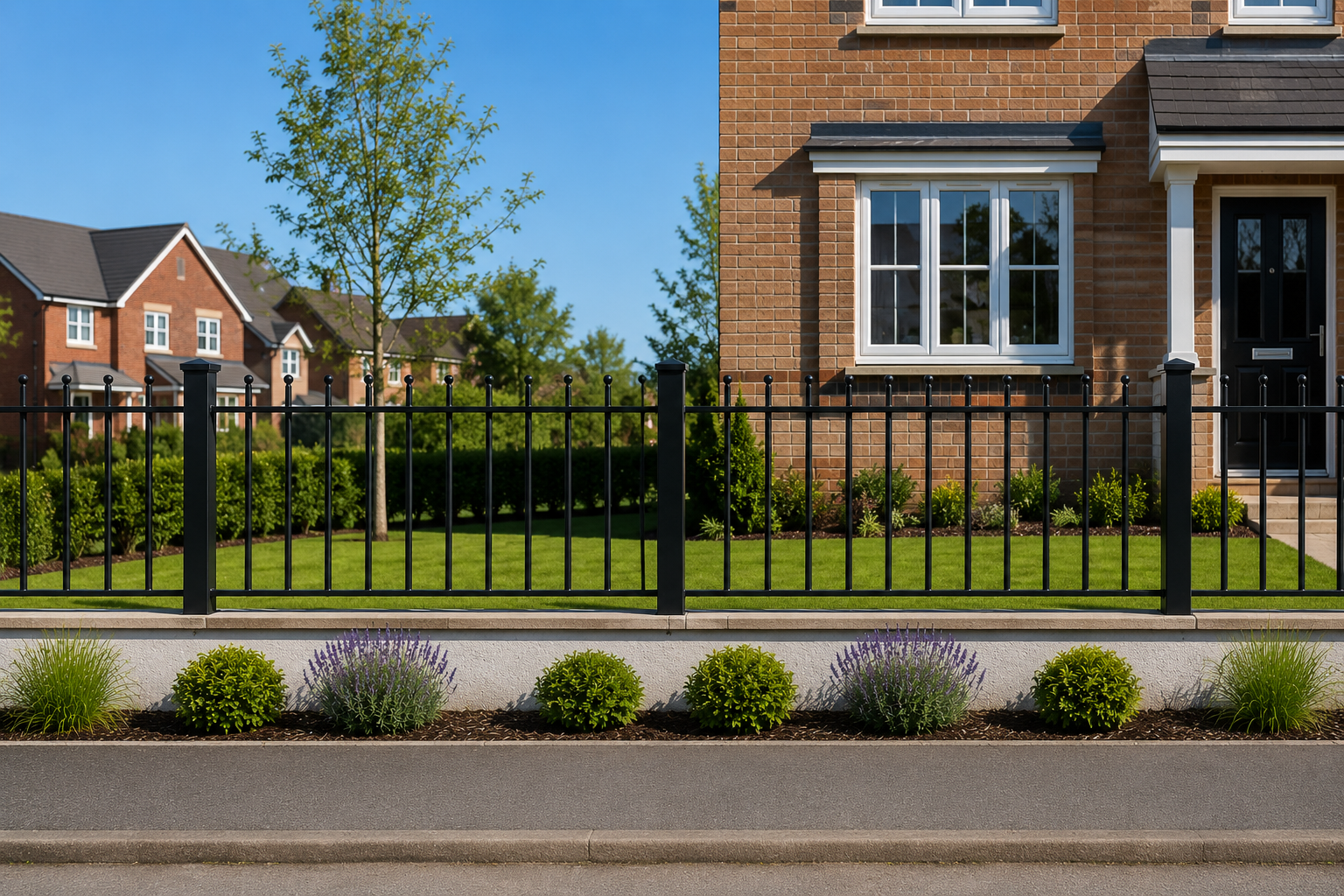 Example · Metal railings
Metal railings are vertical bar panels in galvanised steel or aluminium, fitted to a low wall or set into the ground along a front boundary. A standard job — roughly 1.2 m high, flat top, set into the ground — runs £215–£250/m supplied and fitted in London, most between £215 and £250, with no VAT added. Wall-top railings, spearhead and other ornate tops, and made-to-measure metalwork are priced individually after a survey. They are the standard choice for period front gardens because they define the boundary without closing off the frontage.
Want to run the numbers first? Open the cost calculator with metal railings selected.
Every run is delivered as a GoodFence-managed installation — see how a fence installation in London works end to end, or what's involved in a full fence replacement.
- Standard railings
- £215–£250/m
- Typical height
- 0.9–1.2 m
- Minimum job
- £1,200
1.2 m flat top, ground-set
Front boundaries
Metal fabrication floor applies
What sets the price on a railing run
Height first, bar spacing second. A 1.2 metre run with closer bars uses meaningfully more steel than a 0.9 metre run at standard spacing, and both are priced per metre off the finished height rather than a flat rate.
After that it is the fixing. Railings core-drilled and resin-anchored into an existing brick plinth are the common London job. Where there is no wall, posts go into the ground and the run costs less to fix but more to set out, because the line and the levels have to be right before anything is fixed down.
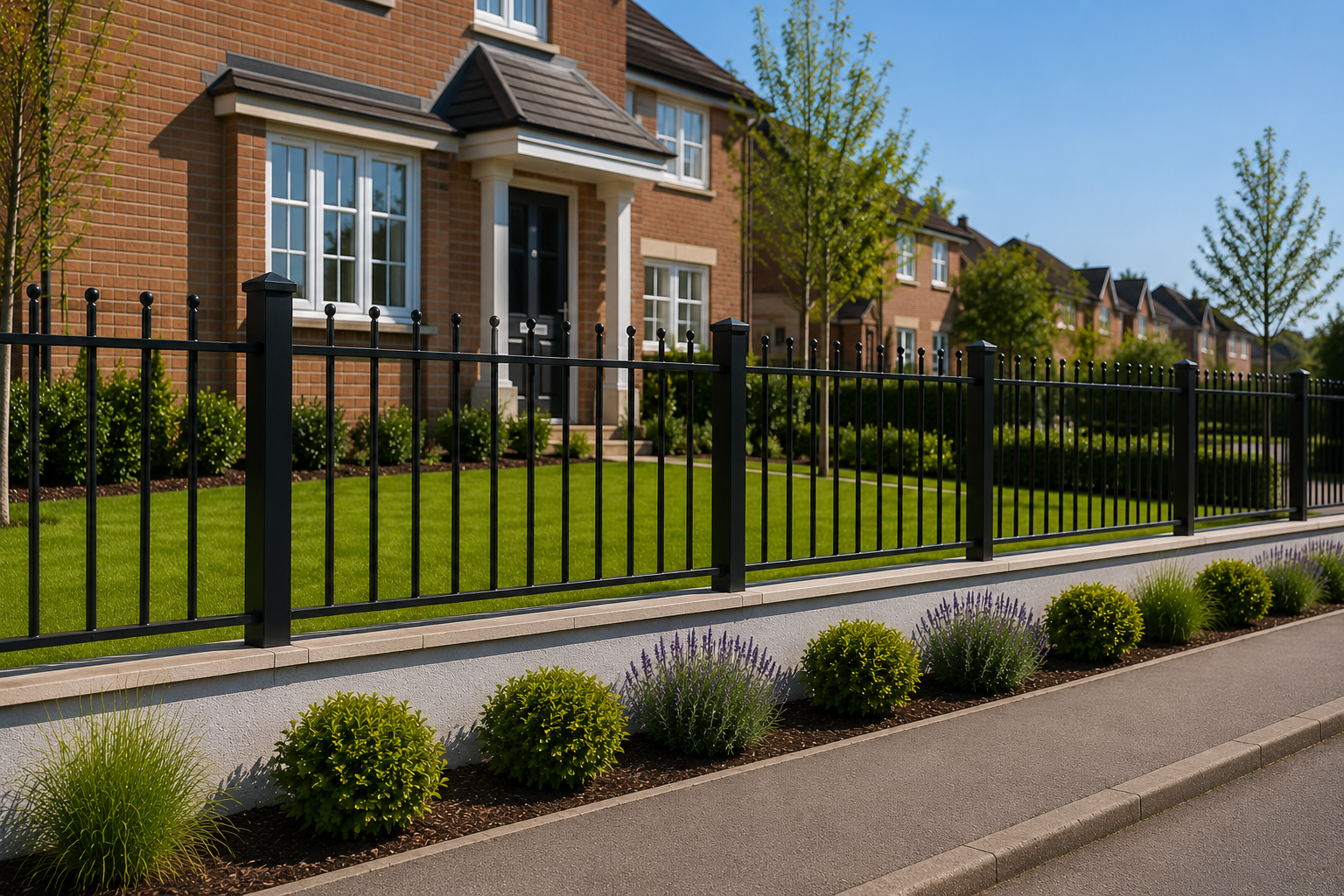
Galvanised, then powder-coated
Steel railings should be hot-dip galvanised before the colour goes on. Powder-coat alone over bare steel looks identical on day one and starts weeping rust at the welds within a few winters, usually where nobody looks.
The steel coating system is stated in the agreed scope. A galvanised-plus-powder-coated specification is reviewed and priced separately where needed; it is not automatically included in the standard ground-set band. Aluminium is not galvanised; its coating follows the manufacturer’s data.
Front gardens, planning and your neighbours
Anything over one metre adjacent to a highway used by vehicles or its footpath normally needs planning permission, and most London front boundaries sit right on that line. We flag it before we price rather than after you have paid for something you cannot keep.
Conservation areas add their own rules on pattern and colour, and a number of London boroughs have an Article 4 direction that removes permitted development rights on front boundaries altogether — meaning even a low railing needs consent. If your street has a consistent railing style, matching it is usually the fastest route to approval and the better-looking result anyway.
Where the railing also guards a drop — a basement lightwell, steps down to a lower ground floor — bar spacing is a safety matter, not a style one. Building Regulations Part K works on a 100 mm sphere: nothing that gap should let a 100 mm ball through. We set the bars to that as standard on any run next to a level change, with the applicable guarding requirements and manufacturer’s fixing details confirmed for that project. BS 1722 is a multipart fencing standard, not a blanket certification for all railings.
Choosing the top: flat, bow, ball, spear or estate
The top of the railing is what people actually notice, and it is the one choice we ask for on the estimate form. Only a roughly 1.2m flat-top, ground-set run is represented by the published band. Bow and other decorative tops are priced after review. Ball, spear and estate tops are priced individually after a look, because they are usually fabricated rather than stocked.
Flat top is the plain, square finish. Quiet, modern, and the safest match for a new-build or a contemporary frontage.
Bow top curves the bars over at the head. It is the softest option, has no points at all, and is the usual pick where children play near the boundary.
Ball top finishes each bar with a small sphere. Traditional without being ornate, and the most common choice on a London terrace.
Spear top is the classic Victorian point. It reads as period-correct on an older house and adds a bit of deterrent along a low front wall.
Estate top uses wide-set horizontal bars rather than vertical ones. It suits long driveways, paddock edges and new-build frontages where you want the boundary read as open.
Standard patterns, or made to measure
Plain vertical bar with a flat top rail, set into the ground on a straightforward run, is the job the rate above describes. Wall-top railings fixed to a plinth, decorative heads, heritage patterns, unusual heights, hot-dip galvanised plus powder-coat specs, unusual fixings, very short runs and anything raked to follow a sloping path are bespoke metalwork.
Bespoke metalwork is priced individually after review or a survey. We will not put a per-metre number on it off a photograph — we measure it, then price it.
- Victorian and Edwardian front gardens
- Defining a boundary without blocking light or view
- Low brick walls that already have a plinth to fix to
- Frontages where a timber fence would look wrong
- Privacy — railings are see-through by design
- Short runs under the £1,200 minimum job
- Security, school, sports or industrial boundaries — see our commercial fencing page
Questions we get asked
Compare it with
Aluminium slatted
from £350/mThe contemporary slatted line without the staining. Powder-coated aluminium that needs a wash, not a repaint.
Gates
Built from the same timber as your fence, hung on hardware that survives a London winter.
Finishes
Colour applied before the boards go up, not brushed on around them afterwards.
Metal railings across London & the South East
Send photos, get an estimateFree estimate · no obligation. Fixed-price survey later only if you want one, from £30 and credited in full against the job.