Fence Height Next to a Road — the 1m Rule and Trellis
The 1-metre limit on front fences adjoining a highway, what counts as a highway, and why trellis on top of a fence is counted as fence.
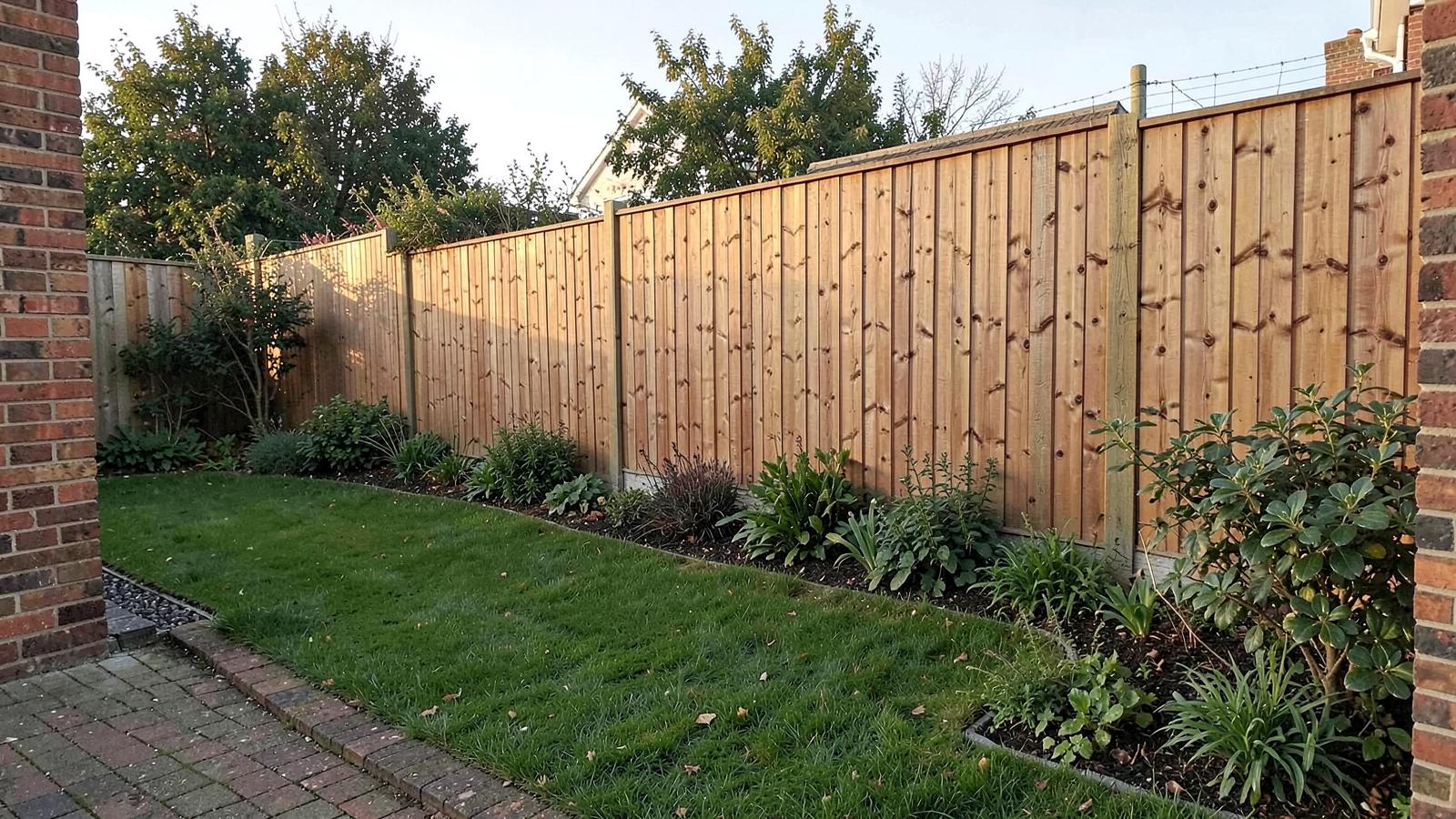
A garden fence adjacent to a highway used by vehicles — or to a footpath of such a highway — is limited to 1 metre under permitted development in England and Wales. Everywhere else in the garden the limit is 2 metres. That single distinction is behind most front-garden enforcement cases, and it catches corner plots hardest.
The general height rules live on the maximum fence height page. This page is the two details people get wrong.
What is the 1 metre fence rule?
Under Class A of Part 2 of Schedule 2 to the GPDO 2015, a gate, fence, wall or other means of enclosure may be built without planning permission up to 2m — but only 1m where it is adjacent to a highway used by vehicular traffic, or adjacent to the footpath of such a highway. It applies to the fence's height measured from natural ground level, and it applies to gates in that run too.
What counts as a "highway used by vehicles"?
Most adopted public roads, including residential streets, and their pavements. A pedestrian-only alley or a public footpath with no vehicular road attached is generally not caught, so a rear fence backing onto a footpath is often still allowed 2m. A private driveway or unadopted shared access is a grey area that depends on the status of the route — the council's highways record settles it, and it is a free phone call.
If your fence runs along the pavement of your street, assume 1 metre until the council tells you otherwise.
How does the 1 metre rule work on a corner plot?
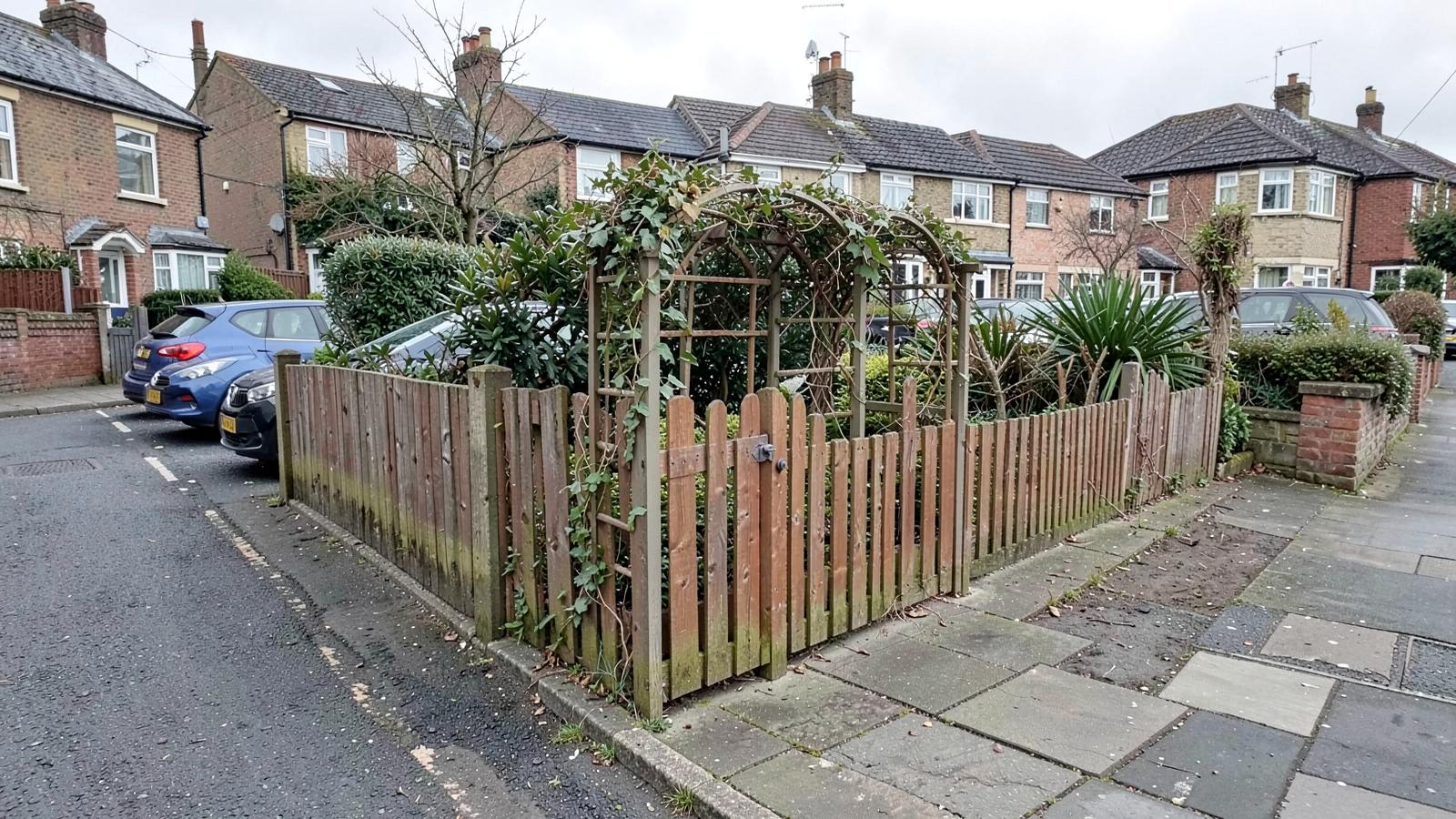
Badly, from the homeowner's point of view. On a corner plot both boundaries that adjoin a highway are capped at 1m, which is why corner houses so often have a low front and low side fence and no usable private garden. This is the most common case where a householder planning application genuinely is the right answer — councils weigh visibility splays and street character, and they do grant permission for higher side fences on corner plots where sightlines aren't compromised.
Can I put a 2 metre fence behind a 1 metre front fence?
Sometimes. If you set the taller fence back so it no longer sits adjacent to the highway, and it is behind the principal elevation of the house, the 2m limit can apply. "Set back" is a judgement, not a fixed distance — a token 30cm will not persuade an enforcement officer. Get it confirmed in writing by the council before you spend money on it.
Does trellis count towards the fence height?
Yes. Trellis fixed to or on top of a fence forms part of the means of enclosure and is counted in the overall height. A 1.8m fence with a 0.3m trellis topper is a 2.1m structure and is over the limit. A 0.9m front fence with any trellis on top is over the 1m limit.
The reason people believe otherwise is that trellis is visually open, so it feels like it shouldn't count. Planning measures the structure, not how much light passes through it.
Is free-standing trellis treated the same way?
Trellis that is genuinely free-standing and separate from the boundary enclosure is still a structure and can still be caught, depending on where it sits and what it encloses. The safe reading is: if it is on or along the boundary and its effect is to enclose, expect it to count. If privacy above 2m is the goal, planting behind the fence is the cleaner route — hedges are outside the permitted development height limit, though they have their own high hedges regime.
What happens if a front fence is too tall?
The council can require it to be reduced. The route is an enforcement notice rather than an instant fine, and the fine only arises from failing to comply with the notice. The practical loss is the cost of building it twice. On a front boundary this is a visible, easily reported breach, so it is one of the more likely ones to be pursued.
Where the rules come from
- Planning Portal — fences, gates and garden walls
- The Town and Country Planning (General Permitted Development) (England) Order 2015, Schedule 2, Part 2, Class A
General information about England and Wales, not legal advice. Your council's planning duty desk will confirm your specific boundary, usually in one call.
Pricing a front boundary properly
Low front fences are fiddlier per metre than a long back run — more posts, more setting out, often awkward parking. If you want a real number rather than a guess, send three photos and your postcode and we'll come back with a written all-inclusive price the same day.