Maximum Fence Height UK — 2m Rule, Permission and Penalties
How tall you can legally build a garden fence in England and Wales without planning permission, the exceptions that catch people out, and what actually happens if you go over.
In England and Wales you can normally build a garden fence up to 2 metres high without planning permission. Next to a highway the limit drops to 1 metre. Everything else on this page is the detail that decides whether those two numbers actually apply to your garden.
This page covers height and permission. Ownership is a separate question — see whose fence is it. The road and trellis limits have their own page: fence height next to a road, and how trellis is counted.
What is the maximum fence height in the UK without planning permission?
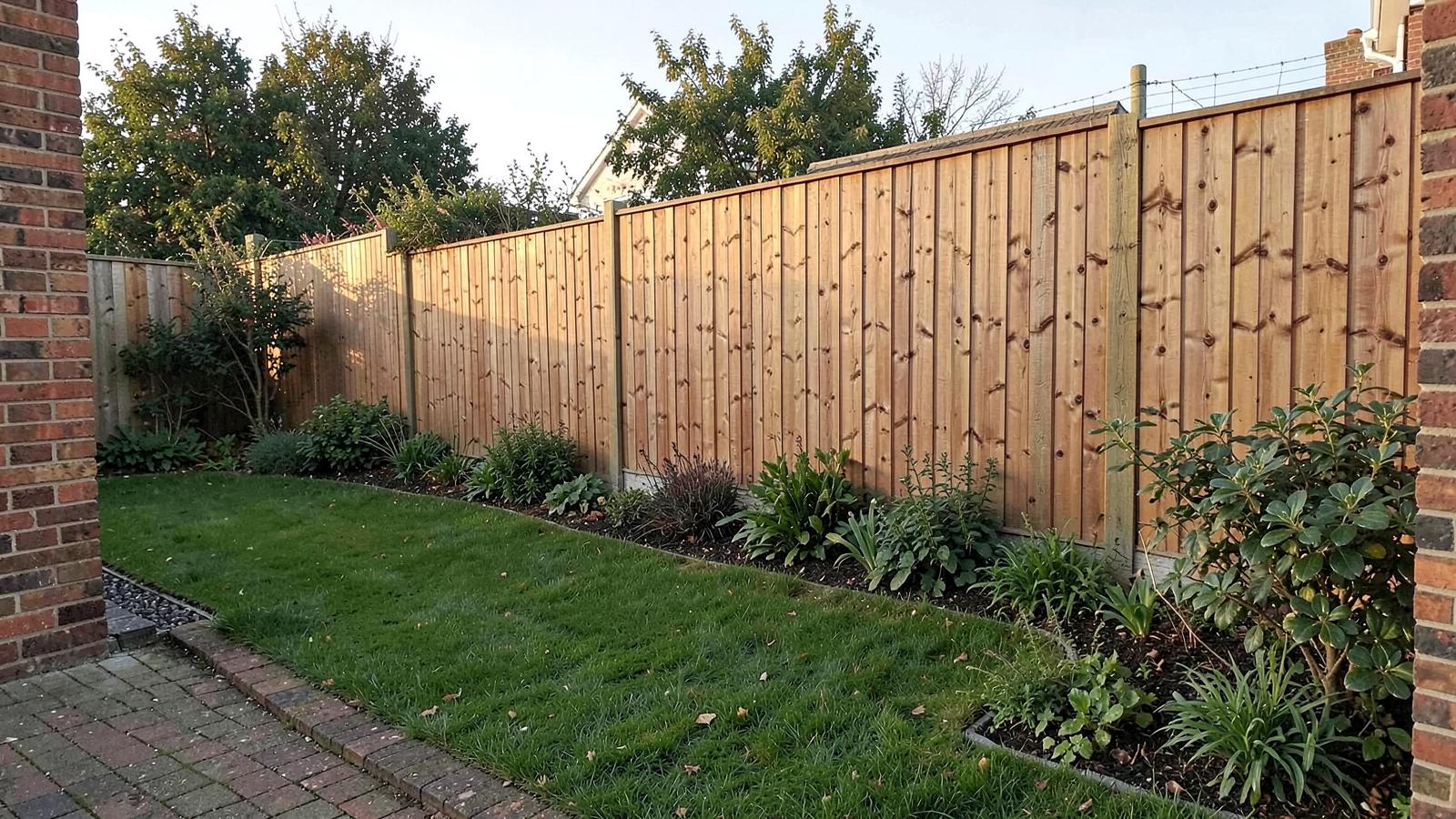
2 metres in most gardens, measured from the natural ground level on the higher side. This comes from permitted development rights in the Town and Country Planning (General Permitted Development) (England) Order 2015, Schedule 2, Part 2, Class A, which covers gates, fences, walls and other means of enclosure. Wales has an equivalent order with the same headline limits. Scotland and Northern Ireland have their own regimes and different detail — don't apply this page there.
What is the 2 metre fence rule?
The 2 metre rule is the height ceiling on permitted development for a fence, wall or gate that is not adjacent to a highway. Under it you can build up to 2m without an application. Over 2m, you need planning permission from your council — there is no automatic right, and no "you're fine if the neighbour agrees" exemption. Neighbour consent is a courtesy, not a legal permission.
How is fence height measured?
From natural ground level, on the higher side of the boundary where the ground is uneven. Gravel boards, kickboards and posts count. A raised bed, decking or a mound you build up under the fence does not reset the measurement — the council measures the finished structure against the original ground, so building the ground up to gain height is the classic way people fail an enforcement check.
When do the 2m permitted development rights not apply?
Five situations remove or narrow them, and any one of them is enough:
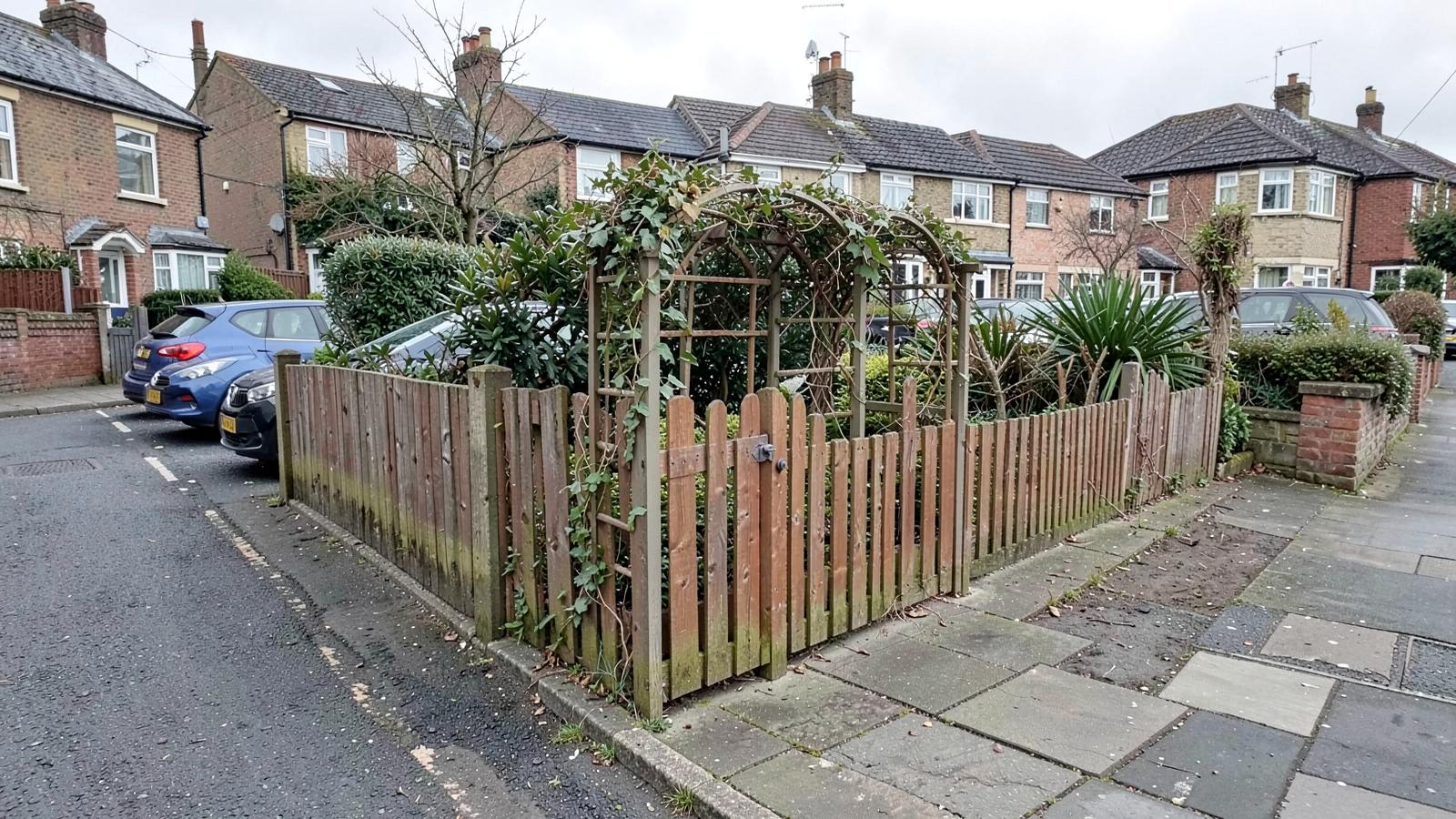
- Adjacent to a highway used by vehicles, or a footpath of such a highway — the limit is 1 metre.
- Listed buildings — a fence within the curtilage of a listed building usually needs consent regardless of height.
- Article 4 directions — councils can withdraw permitted development rights across a defined area. Common in conservation areas and on some estates.
- Planning conditions on your own property — new-build estates frequently strip fence rights in the original permission. Check the decision notice, not just the deeds.
- Boundary of a listed building or a scheduled monument next door — treat as a permission case.
Conservation area status alone does not cap a rear garden fence at 1m, contrary to common advice — but an Article 4 direction inside a conservation area very often does. Ring the council's planning duty desk before you order materials.
Does trellis count towards the 2 metre fence height?
Yes. Trellis fixed on top of a fence is part of the means of enclosure. A 2m fence with a 0.6m trellis topper is a 2.6m structure and needs planning permission. The widely repeated idea that trellis is exempt is wrong, and it is the single most common reason a fence gets an enforcement notice. Full detail on the trellis and road-facing page.
Are there any legal fence height loopholes?
There is no loophole, but there are three legitimate routes above 2m:
- Apply for planning permission. A householder application is inexpensive relative to the fence, and privacy from overlooking is a reasonable ground. Councils refuse far less often than people assume.
- Plant instead of building. Hedges and trees are not subject to the 2m permitted development limit. They are subject to the high hedges regime below, so this is not a free pass — but a hedge behind a 2m fence is lawful where a 2.6m fence is not.
- Free-standing screening away from the boundary. A pergola or garden structure is assessed under different permitted development classes. It is not a way to build a 3m fence, but it can solve an overlooking problem the fence cannot.
Anything sold to you as a "loophole" — building up the ground, calling trellis a plant support, splitting a fence into two 1.5m fences a foot apart — is a fiction that the enforcement officer has seen before.
What are the fines for breaking fence height regulations in the UK?
There is no on-the-spot fine for a tall fence. The sequence is: the council investigates, may invite a retrospective planning application, and if that fails or isn't made, serves an enforcement notice requiring the fence to be reduced or removed. Failing to comply with an enforcement notice is a criminal offence and is what carries a fine — unlimited in the Crown Court, and the council can also carry out the work and recover the cost from you. Councils generally have four years from completion to act on an unauthorised building operation.
The practical cost is almost never the fine. It is paying twice: once to build the fence, once to take it down and rebuild it legally.
What about a neighbour's high hedge rather than a fence?
That is a separate regime — Part 8 of the Anti-social Behaviour Act 2003. It applies to a line of two or more mostly evergreen trees or shrubs over 2m that blocks light or access to a domestic property. You must have tried to resolve it with the neighbour first; then the council can issue a remedial notice, and most councils charge a fee to consider the complaint. It does not apply to a single tree, and it does not apply to a fence.
Do I need my neighbour's permission to put up a fence?
Not if the fence is on your own land and within the height limits. You do need their cooperation for access if the fitter has to work from their side, and you need their agreement if the fence sits on a shared boundary they part-own. In practice most disputes are about access and the finished appearance, not permission. Agree the position, spec and access in writing before work starts.
Where the rules come from
- Planning Portal — fences, gates and garden walls
- The Town and Country Planning (General Permitted Development) (England) Order 2015, Schedule 2, Part 2, Class A
- Anti-social Behaviour Act 2003, Part 8 (high hedges)
General information about England and Wales, not legal advice. Where money or a boundary dispute is at stake, check with your council's planning team and, if needed, a solicitor.
Getting the fence built to the right height
If you know the height you need and want a real number for it, send us three photos and your postcode. We come back with a written, all-inclusive per-metre price the same day — and if the height you've asked for needs permission, we'll tell you before you commit rather than after.