Concrete or timber fence posts — the cheapest decision with the biggest consequence.
The posts are the structure; everything else is infill. A timber post set in concrete is still timber sitting in wet soil, and that's where the rot starts. Slotted concrete posts take the panel or the boards out of ground contact entirely, and let a damaged section be swapped without touching the structure. It's the least visible upgrade on the job and the one that decides whether you're doing this again in ten years.
Concrete posts cost more up front and win almost every time, because fences don't fail at the panel — they fail at the post, in the ground, where timber rots.
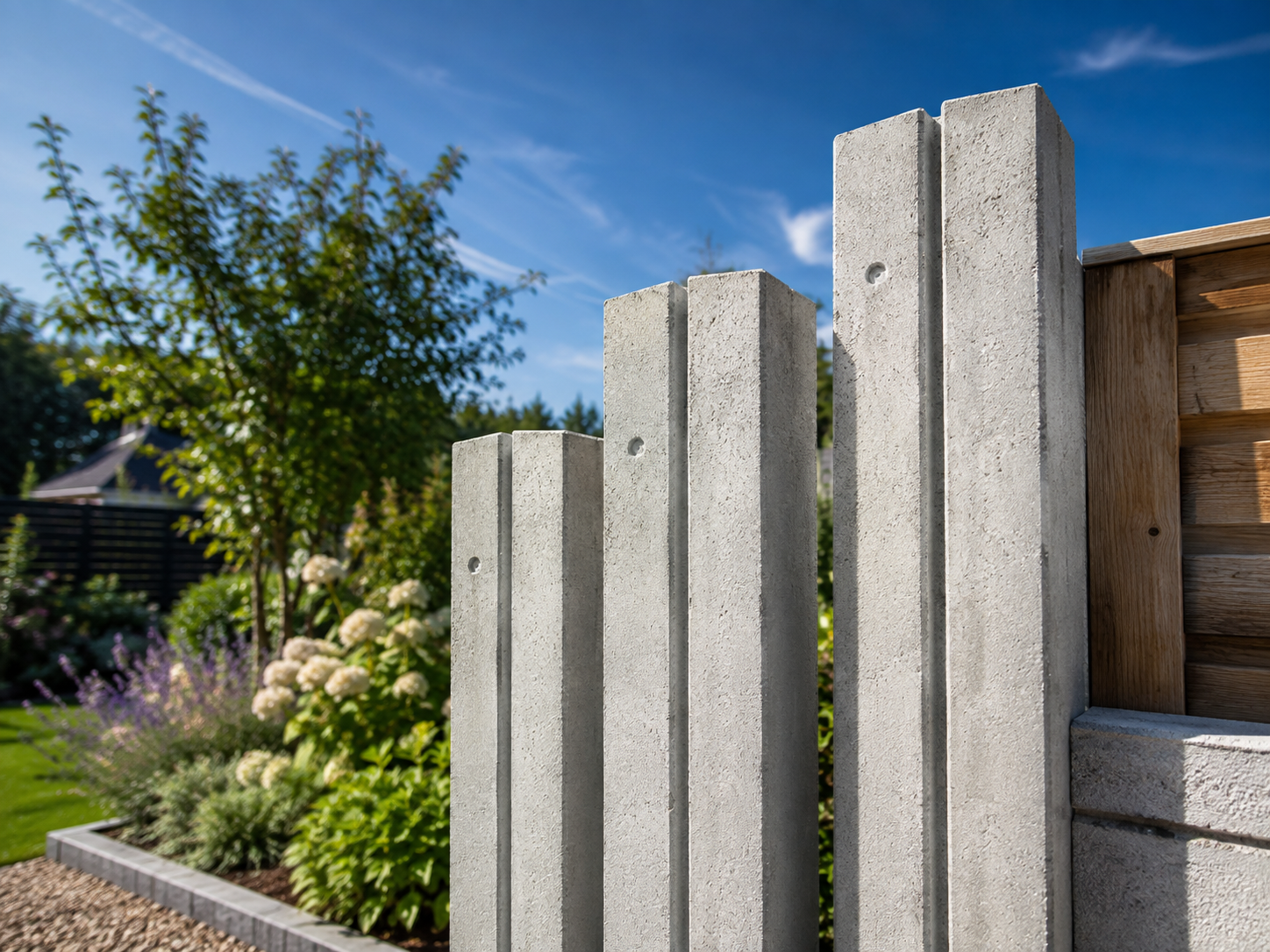
Concrete posts
Slotted posts with a concrete gravel board at the base.
Read the full page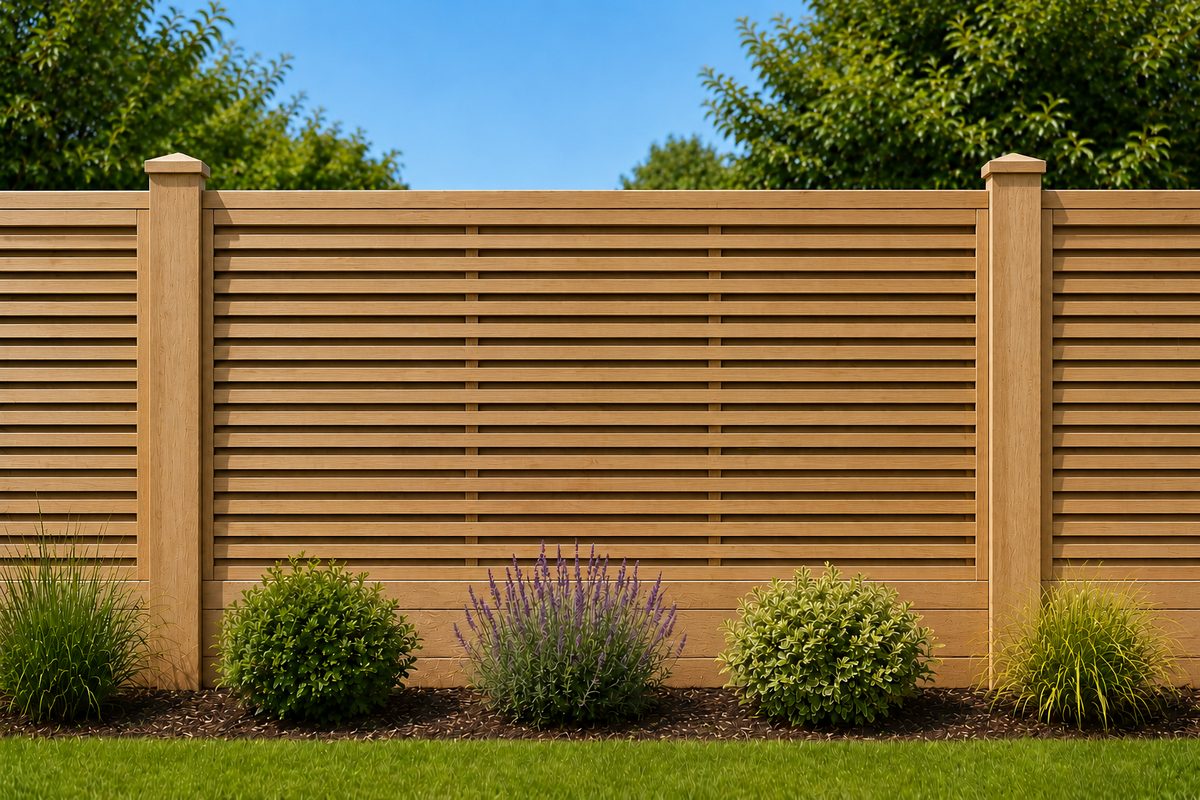
Timber posts
Pressure-treated softwood posts set in concrete.
Side by side
Concrete posts
Timber posts
- Rots in the ground
- Concrete postsNo
- Timber postsEventually, always
- Typical post life
- Concrete posts30 years+
- Timber posts10–15 years
- Swapping a panel later
- Concrete postsSlides out of the slot
- Timber postsUnscrew, prise, refix
- Holding a straight line
- Concrete postsStays true
- Timber postsCan lean as the base softens
- Look
- Concrete postsGrey and industrial, largely hidden once fitted
- Timber postsWarmer, matches the timber
- Up-front cost
- Concrete postsHigher — heavier posts, deeper footings
- Timber postsLower
- Composite retrofit later
- Concrete postsPossible — channels clip in
- Timber postsNot realistically
Prices are per metre, supplied and fitted, inc VAT, for a typical-length run across London and the South East. Access, ground and optional removal of the old fence move the number.
Choose concrete posts if
- You want this to be the last time you replace the boundary structure.
- The ground is heavy clay, wet, or the fence sits at the bottom of a slope.
- You'd like the option to swap panels — or move to composite — without digging.
- You're replacing a fence whose posts snapped at ground level. They always do.
Choose timber posts if
- The look matters more than the lifespan — an all-timber fence reads warmer.
- It's a short decorative run, a front garden, or something you expect to change.
- Access won't take concrete posts — they're heavy and some gardens have no route in.
- The budget genuinely won't stretch, and a shorter-life fence now beats no fence.
What nobody puts in the brochure
Concrete posts
They're heavy, they need a bigger hole and more concrete, and they cost more on the day. On a narrow terraced access route, getting them down the side return is real work — and it shows in the price.
Timber posts
Timber in soil has a clock on it, and no amount of pressure treatment stops it entirely. When the post goes, the fence goes with it — usually taking the panel and your Saturday.
Questions we get asked
Still deciding?
Composite vs timber
Buy timber if you want the lowest price today and don't mind treating or replacing it inside twenty years; buy composite if you plan to stay put and want a boundary you never touch again — it costs roughly twice as much per metre fitted and only pays that back over time.
Closeboard vs overlap
Overlap panels are the cheapest way to replace a whole boundary and the easiest to change later; closeboard costs more per metre but is a genuinely stronger fence, built on site, that outlasts panels by years.
Hit-and-miss vs closeboard
Closeboard gives you total privacy and costs less; hit-and-miss lets wind through on purpose, which is what you want on an exposed garden, and looks the same from both sides — so it's the better neighbour fence.
Free estimate · no obligation