Hit-and-miss or closeboard — privacy or wind?.
Both are built on site rather than dropped in as panels, so both are a step up from panel fencing. The difference is porosity. Closeboard is solid: nothing gets through it. Hit-and-miss alternates boards front and back, so it screens the view at eye level while letting air pass — and, unlike almost every other fence, it has no bad side.
Closeboard gives you total privacy and costs less; hit-and-miss lets wind through on purpose, which is what you want on an exposed garden, and looks the same from both sides — so it's the better neighbour fence.
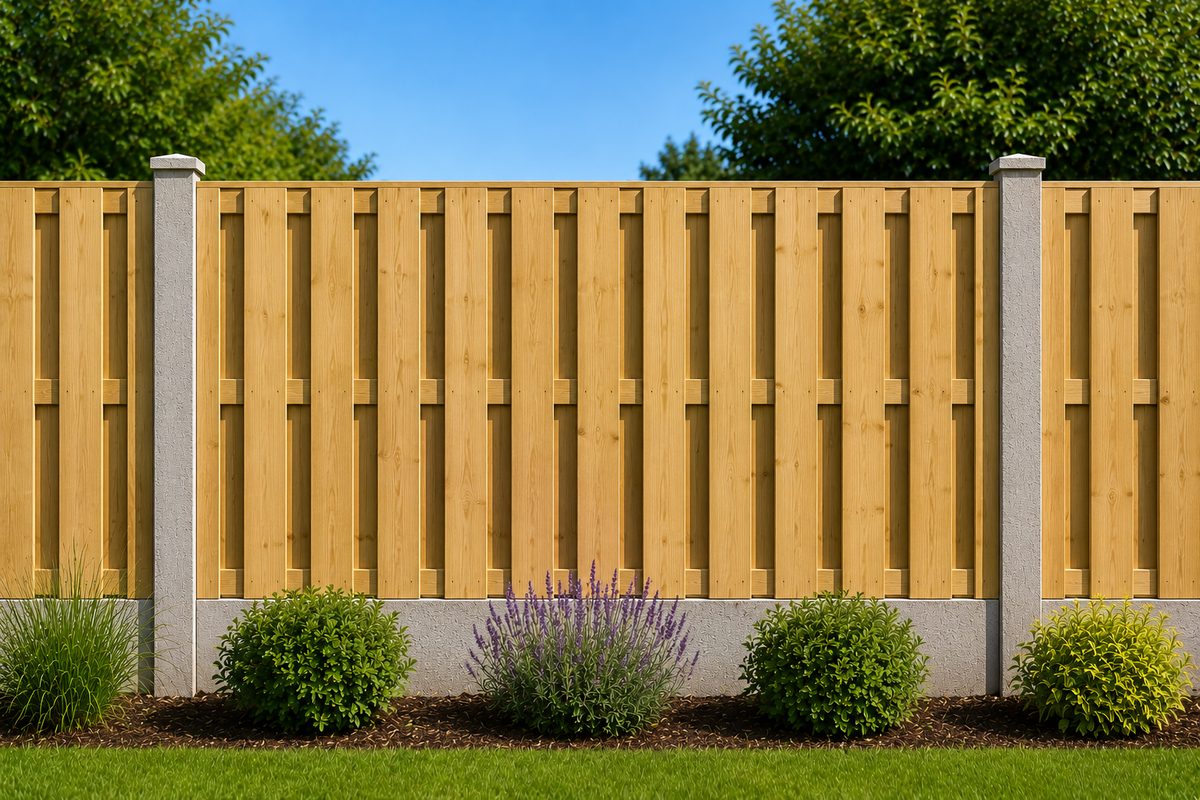
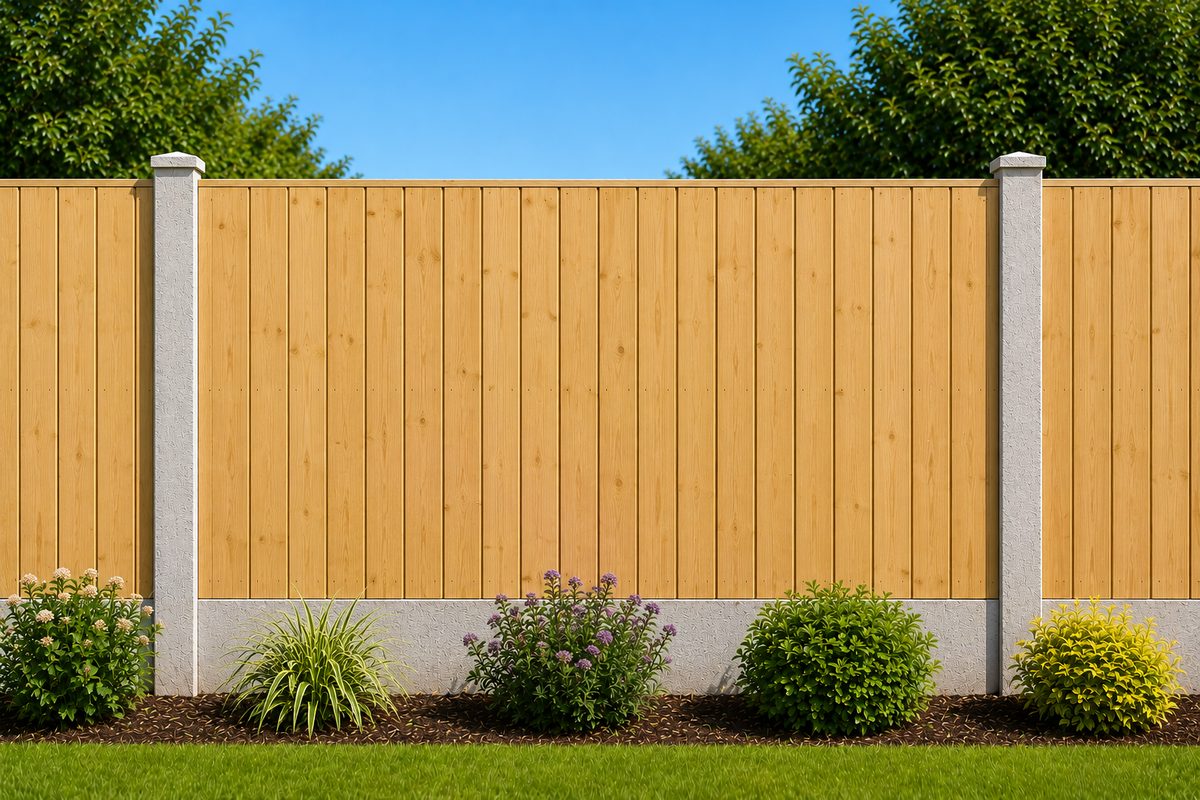
Side by side
Hit-and-miss
Closeboard
- Fitted price, typical run
- Hit-and-miss£195–£230/m
- Closeboard£165–£225/m
- Privacy
- Hit-and-missHigh at eye level, glimpses on the angle
- CloseboardComplete
- Wind
- Hit-and-missBleeds through the gaps — least stress on posts
- CloseboardSolid sail — posts take the full load
- Both sides
- Hit-and-missIdentical — no back side
- CloseboardRails show on one side
- Realistic service life
- Hit-and-miss15–20 years
- Closeboard15–20 years
- Timber used
- Hit-and-missMore boards, so more cost
- CloseboardFewer boards for the same run
- Best on
- Hit-and-missExposed plots, shared boundaries
- CloseboardSheltered plots, maximum privacy
Prices are per metre, supplied and fitted, inc VAT, for a typical-length run across London and the South East. Access, ground and optional removal of the old fence move the number.
Choose hit-and-miss if
- The garden is exposed — corner plot, open aspect, or you've lost a fence to wind before.
- It's a shared boundary and you'd rather not hand your neighbour the rails.
- You want air moving through the garden for planting rather than a dead-still corner.
- You like the rhythm of it — it reads as a designed fence, not a default one.
Choose closeboard if
- Privacy is the entire point and you want nothing visible through the line.
- The boundary is sheltered by buildings or other gardens.
- You want the strongest solid timber boundary per pound spent.
- You're screening something specific — bins, a hot tub, a road.
What nobody puts in the brochure
Hit-and-miss
It costs more per metre because it uses more timber for the same run, and it is not a total screen — from an angle you'll catch glimpses through the gaps. If absolute privacy is the brief, this isn't the fence.
Closeboard
A solid fence is a sail. On an exposed boundary, every gust goes into the posts and the footings, which is exactly how fences come down in a February storm. It also has a visible back — someone gets the rails.
Questions we get asked
Still deciding?
Composite vs timber
Buy timber if you want the lowest price today and don't mind treating or replacing it inside twenty years; buy composite if you plan to stay put and want a boundary you never touch again — it costs roughly twice as much per metre fitted and only pays that back over time.
Closeboard vs overlap
Overlap panels are the cheapest way to replace a whole boundary and the easiest to change later; closeboard costs more per metre but is a genuinely stronger fence, built on site, that outlasts panels by years.
Concrete vs timber posts
Concrete posts cost more up front and win almost every time, because fences don't fail at the panel — they fail at the post, in the ground, where timber rots.
Free estimate · no obligation