Acoustic Fencing UK: What Actually Cuts Garden Noise
Acoustic fencing reduces road and neighbour noise, but only if it is solid, heavy, sealed at the ground and tall enough. An honest guide to what works.
Quick answer
Acoustic fencing is a solid, dense boundary fence built to block sound rather than just sight. A well-built barrier with no gaps, enough mass and a sealed base typically takes the edge off traffic and neighbour noise by roughly 5–10 dB at ear height behind it, which most people notice as a clear drop rather than silence. No garden fence makes a busy road disappear. The three things that decide whether it works are: no gaps anywhere, enough weight per square metre, and enough height to break the line of sight to the noise source.
What makes a fence "acoustic"
Sound travels through gaps first, then through thin material, then over the top. An acoustic fence tackles all three:
- No gaps. Even a small gap under the boards or between panels lets a surprising share of sound through. Overlap panels and slatted designs leak; a sealed run does not.
- Mass. Heavier boundaries block more sound. Acoustic barriers are commonly specified at around 10 kg/m² or more, which is why they use thick tongue-and-groove timber or dense composite rather than thin feather-edge.
- Height and position. If you can see the road from where you sit, the fence is not blocking the direct sound path. Closer to the source or closer to the listener works better than halfway between.
Reflective vs absorptive
A reflective acoustic fence is solid and dense, and bounces sound back towards its source. That suits most gardens. An absorptive fence adds a sound-absorbing face, so less noise bounces off it, which matters when a hard surface sits opposite (another fence, a wall, a house). Absorptive systems cost more and are usually only worth it on commercial or roadside schemes.
Height rules still apply
Planning rules do not change because a fence is acoustic. In England, permitted development generally allows up to 2m on most boundaries, and 1m where the fence is next to a vehicular highway or the footway beside it. Corner plots often fall under the 1m rule on the road-facing sides. Going higher normally needs planning permission. See our maximum fence height guide for the detail.
Is closeboard close enough?
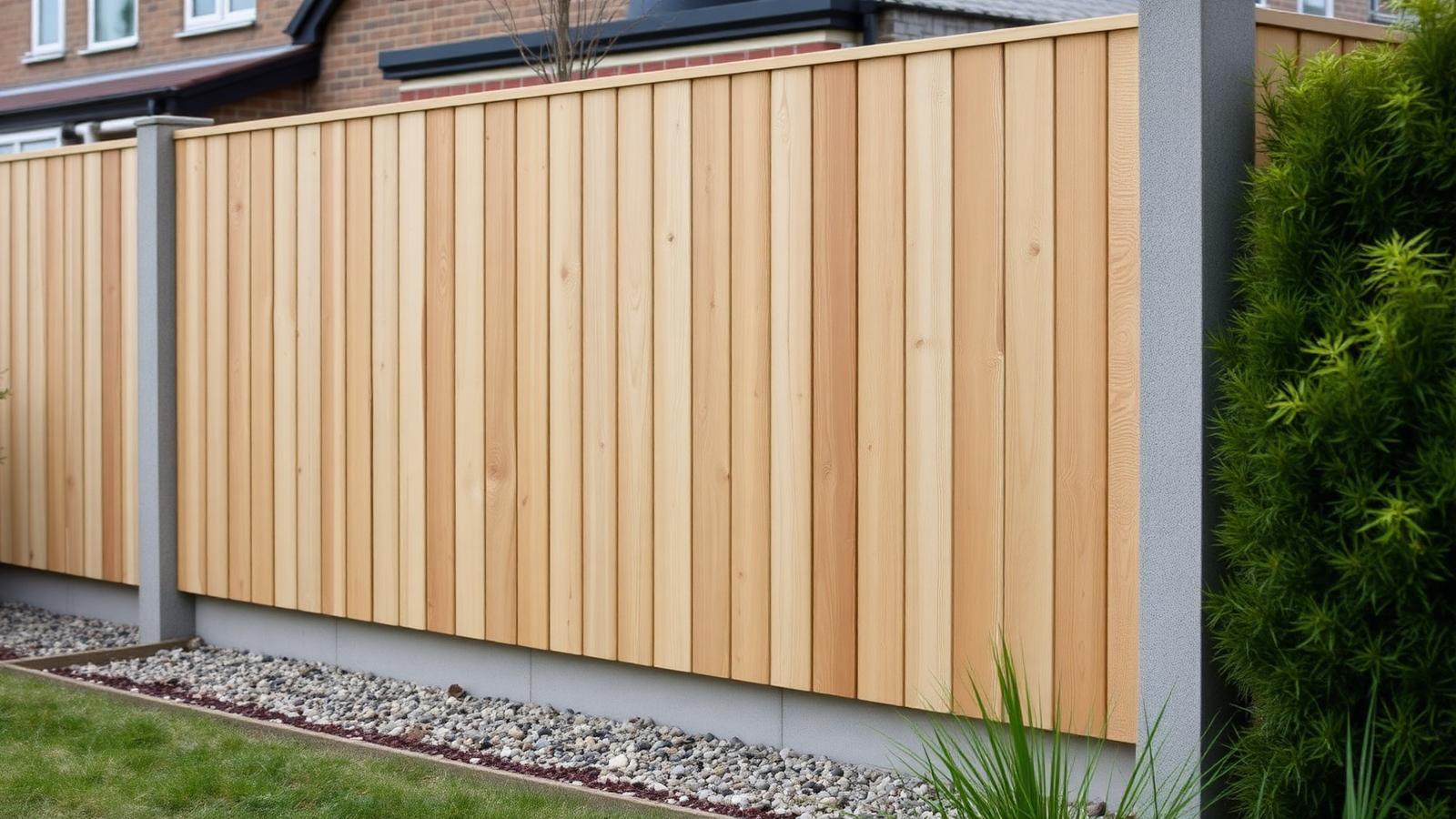
For many gardens, yes. A closeboard fence on concrete posts with a gravel board at the base has no through-gaps and plenty of mass, so it already behaves like a basic reflective barrier. It will not match a purpose-made acoustic system, but it is a sensible middle ground when the noise is a nuisance rather than a constant roar. Composite fencing is another solid, heavy option.
Dedicated acoustic systems are specified and priced by hand. Send photos and a postcode through the estimate form, or use the commercial enquiry for roadside, school or site schemes.
When acoustic fencing will disappoint
- The noise source is above the fence, such as an upstairs window or a raised road.
- There is a gap under a gate or a side passage left open.
- You expect silence. Expect a clear, worthwhile reduction instead.
FAQ
Does acoustic fencing really work?
Yes, within limits. A solid, heavy, gap-free fence tall enough to block the line of sight typically reduces noise behind it by roughly 5–10 dB. That is a noticeable drop, not silence.
What is the best fence for blocking noise?
A purpose-made acoustic barrier is best. For most homes, a closeboard fence on concrete posts with a gravel board, or a solid composite fence, gives a good part of the benefit at lower cost.
How high can an acoustic fence be without planning permission?
The same as any fence: generally up to 2m on most boundaries and 1m next to a vehicular highway or its footway. Higher normally needs planning permission.
Do gaps under a fence let sound through?
Yes. Gaps are the main way sound gets past a fence, which is why acoustic fences are sealed at the base with a gravel board or a solid kick-board.